Resources
Conversations across generations
Bridging Expectations at Work: A Guide for New Workers and the People Managing Them.
The first part is for the younger worker entering or just recently entered the workplace.
The second part is for the more experienced person who finds themself interacting with or responsible for the younger worker.
Navigating Workplace dynamics
At the launch of a new UCD Alumni Careers Webinar Series, I spoke about a not-so-hidden playbook to navigating workplace dynamics. The webinar focused on helping attendees see what’s actually happening around them at work, not just what’s officially on the agenda.
What we covered:
Why influence is rarely tied to a job title and how to identify the trust networks that actually move the needle.
Why we often misread situations when we are invested in the outcome, and how to distinguish between resistance to your idea versus resistance to the moment.
The one specific question that moves you from defensive to curious the second a pitch starts to slide off the rails.
“I wish it were longer! The time flew by, I found the talk really well presented and actionable.”
- Early-Career Attendee
Watch the full webinar here!
“I found it relatable and easy to connect with the concept because of the examples that were used. I found the session useful.”
- Early-Career Attendee
Management and HR in it Together
Most organisations are caught in a self-perpetuating cycle where managers' overwhelm creates HR's firefighting workload, which prevents HR from providing the development that would reduce managers' overwhelm.
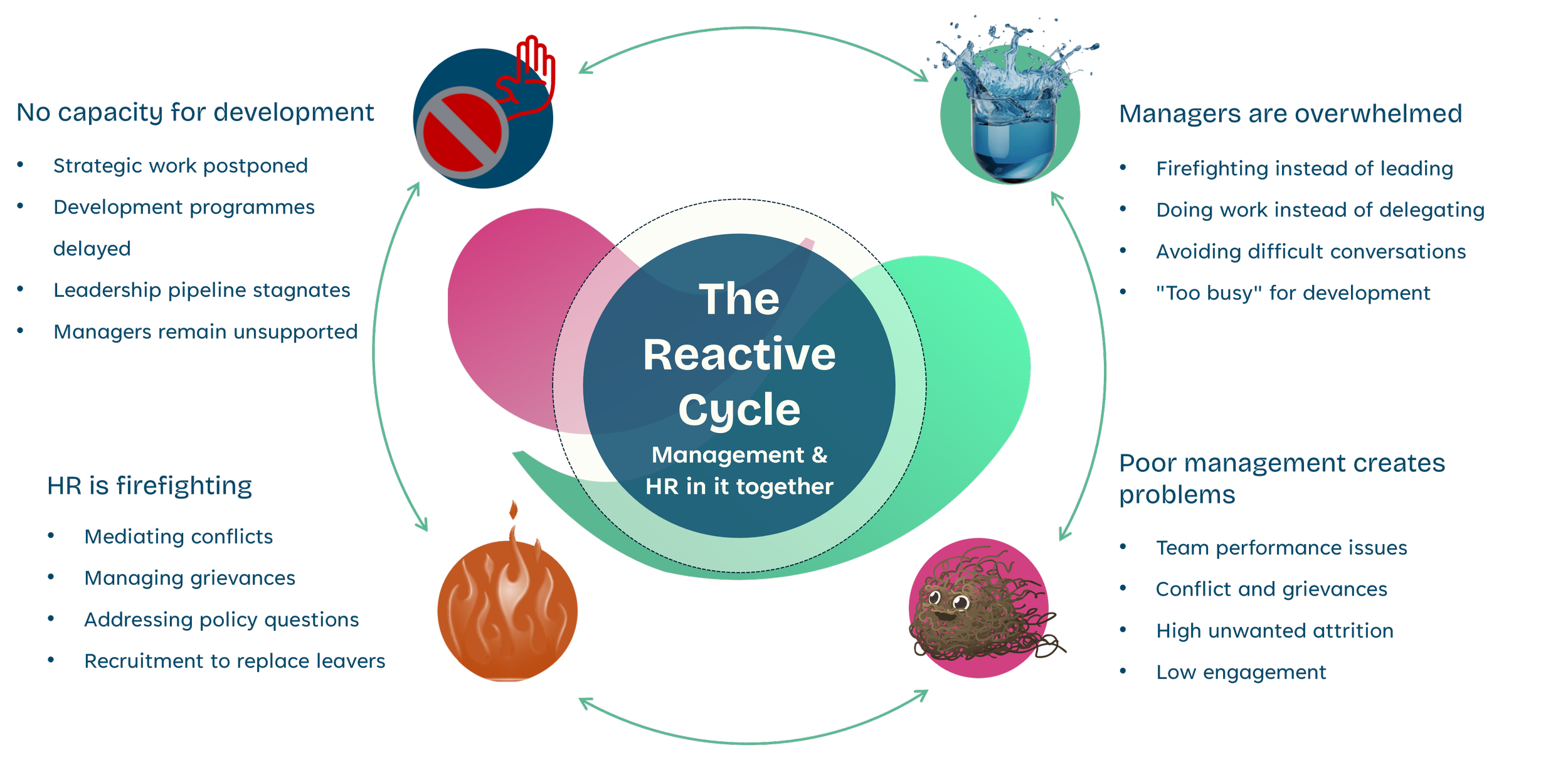
Feel familiar?
There is a way out!
I have a simple diagnostic that helps you see where your organisation is stuck and which intervention points might shift the pattern. Complete the form below and mention The Reactive Diagnostic Cycle in the subject field and I’ll send it to you.
Creating Safety in Your Team: A Self-Reflection
Psychological safety is the belief that your workplace is safe enough to take interpersonal risks - to speak up, admit a mistake, ask a question, or push back on an idea without fear of how it will land.
When it exists, people focus on the work. When it does not, they focus on protecting themselves.
The single biggest factor in whether psychological safety exists on a team is the manager's behaviour.
This short reflection tool gives you ten realistic scenarios and asks you to notice your own patterns honestly. Complete the questionnaire below, leave us your email address, and we will send you the scoring guide so you can interpret your results and identify where a small shift in behaviour could make the biggest difference to your team.
Discussion Paper
Intelligent Working and the Transformation of Management Practice
Why Context Changes Everything We Thought We Knew About Leadership Development
The skills required for effective management in the age of intelligent working are not new. Critical thinking, psychological safety, sound judgment and the ability to coach others have been the currency of good leadership for decades. What has changed, fundamentally and irreversibly, is the context in which these skills must now be deployed.
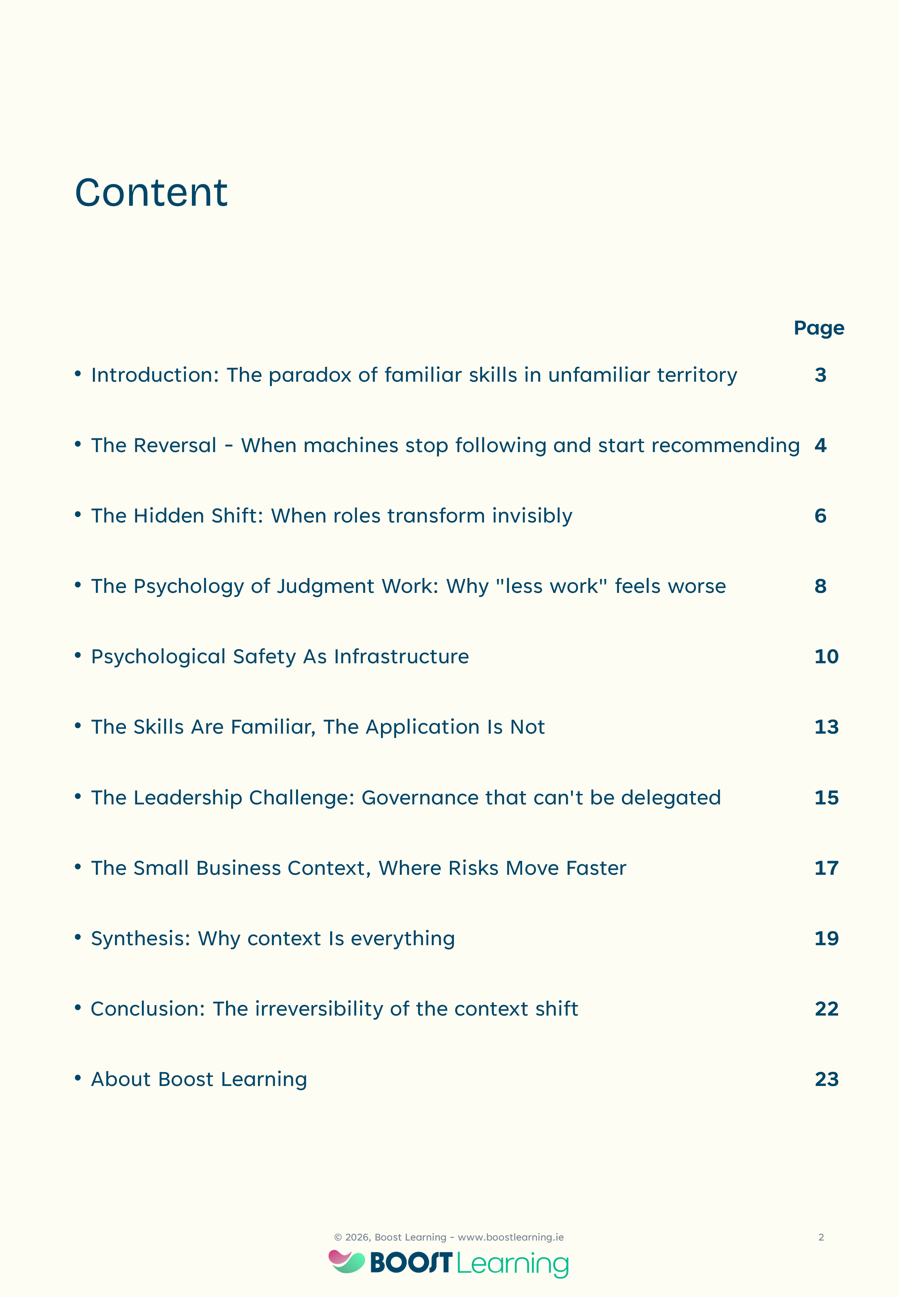
This paper synthesises insights from a January 2026 presentation and panel discussion on "Leading in the Age of Intelligent Work", organised by Technology Ireland ICT Skillnet and hosted by IBEC, to explore not what managers need to know, but why familiar capabilities are failing when applied to the new realities of AI-augmented work. The central argument is this: intelligent working has reversed the fundamental relationship between human and machine, and this reversal transforms the purpose, application, and consequences of management capabilities in ways we are only beginning to understand.